User Spotlight: Improving Prehospital Communication with Michigan EMS

User Spotlight:

Farmington Hills, MI - Improved Prehospital Communication Between Michigan EMS and Area Hospitals

About Farmington Hills Fire Department

In 2019, the Farmington Hills Fire Department responded to 5,785 medical emergencies. With many of these patients requiring advanced life support, clear and efficient prehospital communication is a necessity. The proper communication of all information from Emergency Medical Services (EMS) to hospital teams is crucial to ensuring that hospitals are fully prepared to treat incoming patients. But radio communication is simply not enough. Too many details can get lost in translation.

One App for All Prehospital Communication

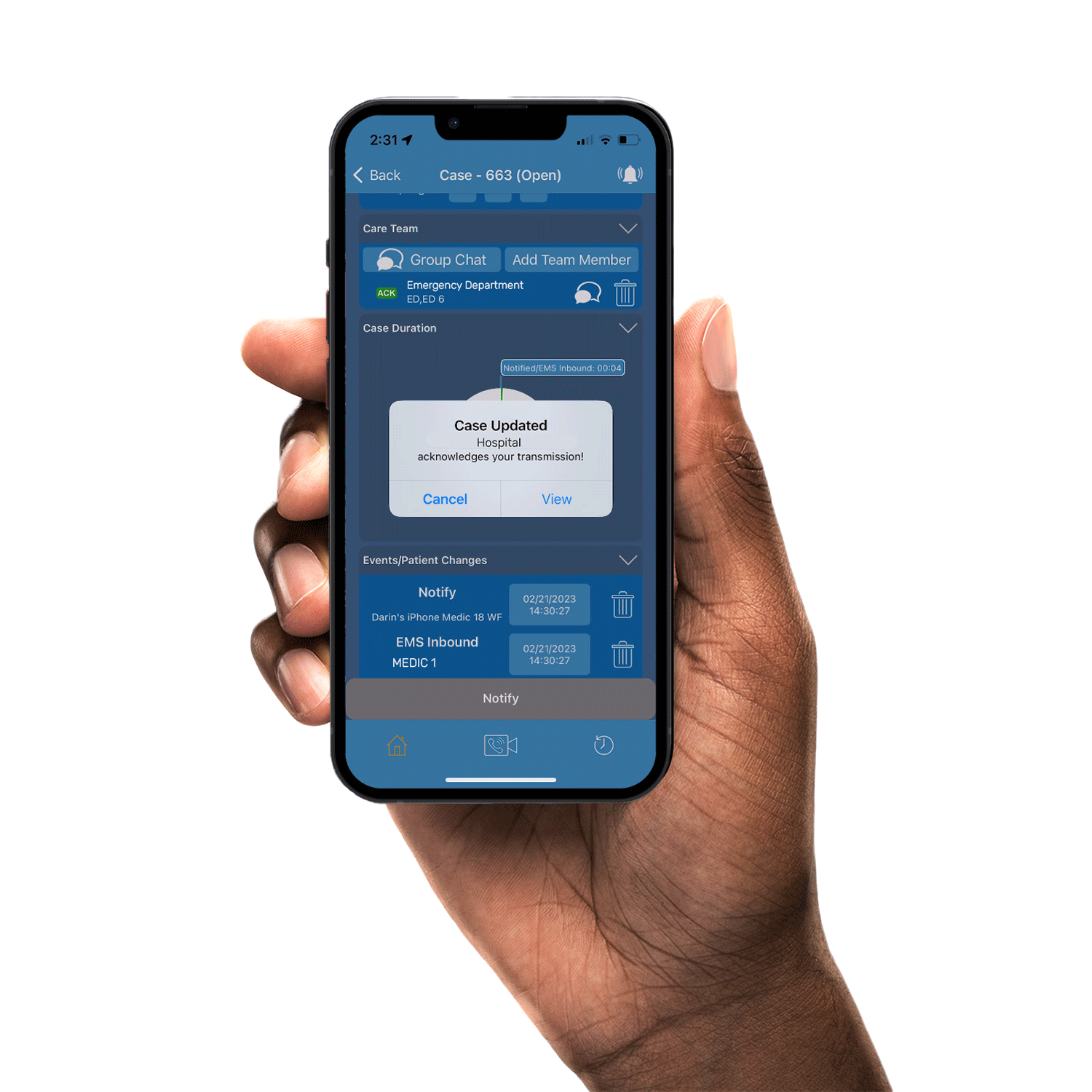
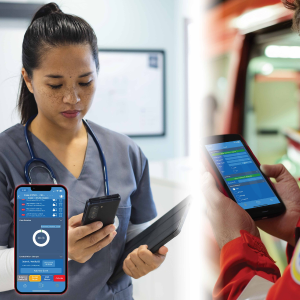
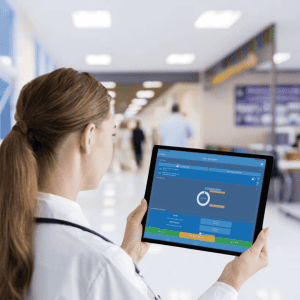
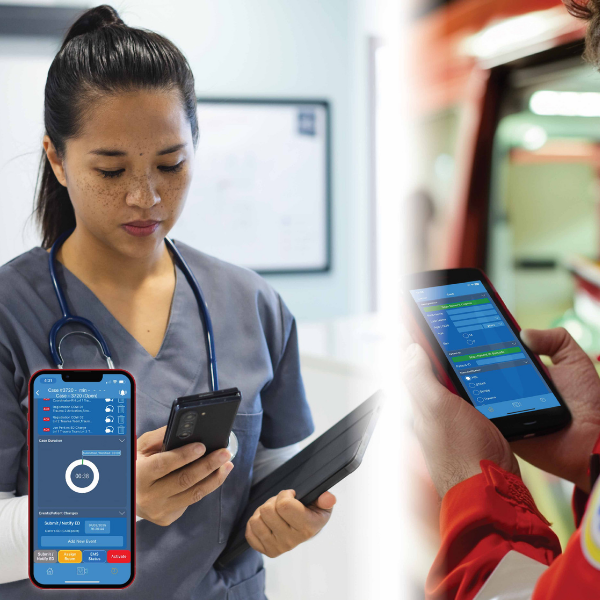
That’s why the Farmington Hills Fire Department, the Farmington Public Safety Department and their partner hospitals—Beaumont Hospital – Farmington Hills and Henry Ford West Bloomfield Hospital—use GD e-Bridge for all prehospital communication. This solution has live video and secure multimedia capabilities, which allows EMS teams to send pictures, videos, audio and messages to the hospital while at the scene.


For the fire department, e-Bridge “affords us the opportunity to give health care providers within emergency departments an even greater appreciation than we ever have before as to what we’re bringing them,” says Farmington Hills Fire Department EMS Coordinator Jim Etzin.
Seeing the Patient Before Arrival

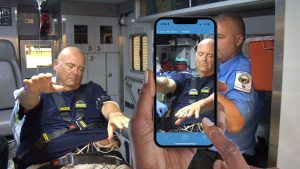
GD e-Bridge also allows hospital teams to see electrocardiograms and neurological examinations. This is a valuable feature for the Farmington Hills community, in particular, as their EMTs hold one of the highest survival rates of cardiac arrest in the United States. Having access to these tests and examinations—and any pictures and videos—helps partnering hospitals better prepare to care for patients experiencing this severely life-threatening illness, and others. It ensures that the right teams are in place so that interventions can begin immediately.

“Pictures give us a lot of useful information to be able to decide how to best care for and what kind of injuries we should be looking for or can expect, based on the mechanism,” says Beaumont Farmington Medical Director of the Emergency Trauma Center Dr. Sanford Vieder. “If you can direct your care based upon the circumstances in which that injury occurred, then that really gives you a heads up in terms of really honing your areas of concern and treatment.”

Configured for Every Team

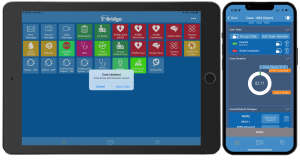
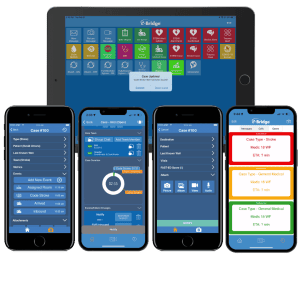
The easy-to-use GD e-Bridge is powered through a smartphone. It is highly configurable, allowing hospital teams to create the best protocols for their individual needs. GD works with EMS and Hospital teams to build their own easy-to-navigate templates, including interface, alerts, buttons, workflow, authorized participants and more. With prehospital communication streamlined, more time is saved for patient care, which can be lifesaving.

In addition to these multimedia capabilities, GD e-Bridge allows hospital teams to:


Time-stamp and record all communication.

Track all steps of a patient’s lifecycle.

Track incoming ambulances through real-time ETA mapping on mobile devices.

Strengthen team communication.

Streamline training and documentation.

Send automated notifications to select team members.
User Spotlight: Launching Oakland County EMS-Hospital Communications into the Future

User Spotlight:

Oakland County, MI - Launching Oakland County EMS-Hospital Communications into the Future

About OCMCA

In late 2020, the Oakland County Medical Control Authority (OCMCA) in Oakland County, Michigan, decided that to simplify, consolidate and modernize EMS-hospital communications, they needed to transition all their EMS from radio to GD’s mobile telemedicine app, e-Bridge. One of 59 medical control authorities in the state of Michigan, the OCMCA supervises and coordinates the Oakland County EMS system – that’s 50 EMS agencies, 3,000 EMS providers, 15 hospitals, more than 250,000 calls for service each year.

Moving Beyond 800 MHz Radios

The quality of communication between EMS and hospital teams can make all the difference in patient outcomes. While many EMS systems have embraced modern telemedicine and telehealth technology for sharing patient information with the ED, some still use phone or radio systems. But there is so much more to patient evaluation, preparation, and treatment than audio communication can convey. Voice-only systems only allow EMS to share a fraction of patient information from the field.

For the last 25 years, Oakland County EMS has been using the same 800 MHz radios, which were designed for police officer dispatch in the 1980s. Allowing EMS only 30 seconds to relay an audio message to the ED, this method of communication doesn’t function the way EMS needs it to – and it costs $50 million in infrastructure to upgrade. The OCMCA conducted a search for state-of-the-art telehealth solutions for emergency response team communication, and they chose e-Bridge.

“We reached out to all the other vendors that provide any type of communications device like this, and no other company could match what GD had produced with e-Bridge,” said Bonine Kincaid, OCMCA Executive Director. “When a paramedic can show a doctor a patient, and even have the doc talk to the patient, the care is greatly enhanced – everything from strokes to refusals.”

Now, that spirit of unification is extending even further. Mercy Medical is part of Trinity Health of New England, and Renee is actively encouraging wider adoption within their network:

“Mercy is part of Trinity Health, and I know that we’re trying to get three of our hospitals in Connecticut on board with it also… and I’ve resoundingly said, absolutely, spend the money.”

This regional approach strengthens the continuity of care for patients and providers alike, creating a standardized, streamlined EMS-hospital communication network that spans multiple facilities—and ultimately, improves emergency healthcare across the entire system

Rolling Out e-Bridge

The OCMCA has encouraged all regional hospitals and medical control authority EMS agencies to participate in an Electronic Communications special study to start using e-Bridge for stroke, STEMI, trauma, and general medical alerts. With each agency that has joined, word of mouth has spread that replacing radios with e-Bridge for all pre-hospital communications is the most efficient and effective solution for the OCMCA.

By enabling HIPAA-secure sharing of pictures, audio, video, and live streaming, as well as providing audio and visual alerts and notifications with real-time ETA tracking and 12-lead management from any monitor, e-Bridge supports EMS and hospital teams in their efforts to provide the best possible patient care. e-Bridge is fully configurable and scalable, allowing users to customize an interface tailored to their needs.

“While some vendors could do parts of what e-Bridge could do, no one could do it all,” said Kincaid. “In particular, with GD, the ability to design our own forms and have what we want on the screen pop up is so valuable.”

Countywide Adoption

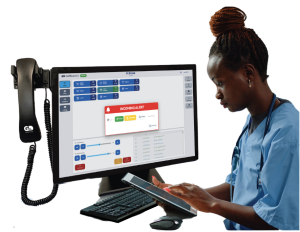
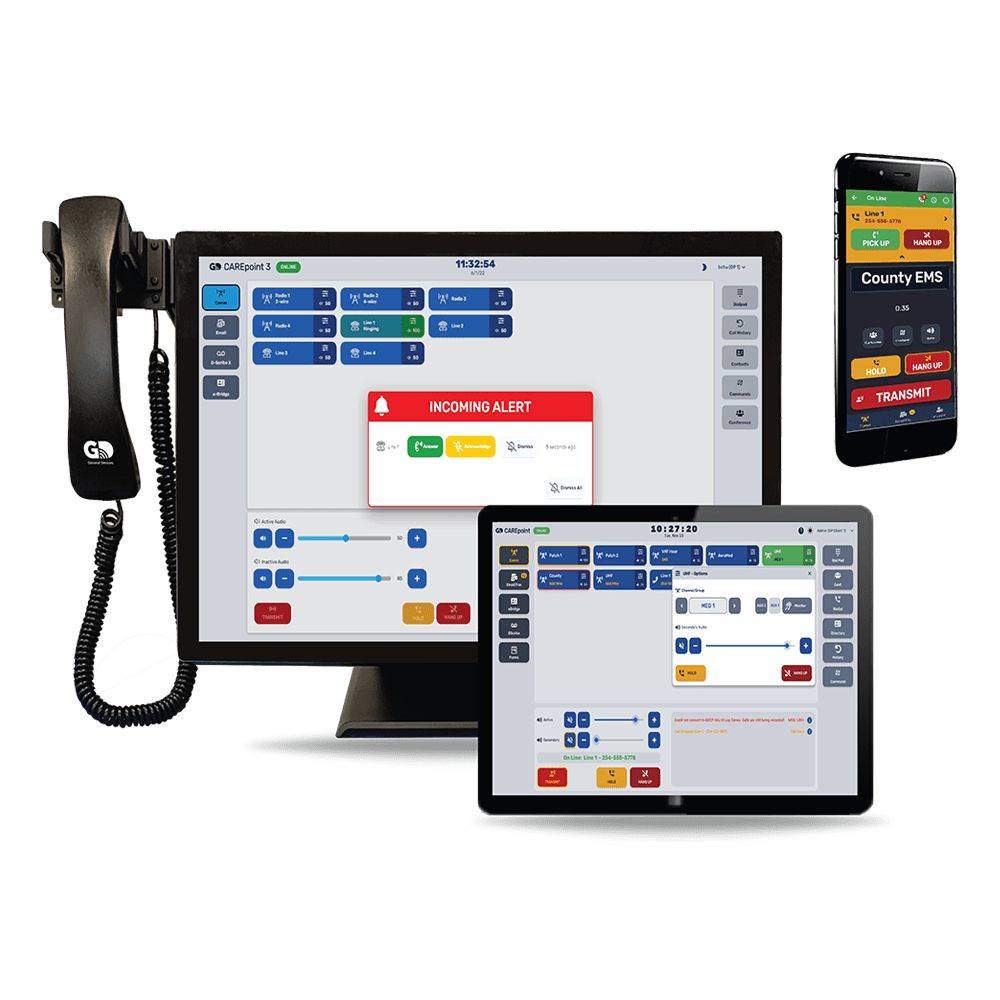
A year later, every hospital in the county is now set up to receive communication via e-Bridge, many through GD’s CAREpoint Workstation, which integrates seamlessly with e-Bridge. About 40 of the 50 EMS agencies in Oakland County use e-Bridge and by the end of the year, the goal is to get all 50 to start. Two other counties in Michigan – McComb and St. Claire – have now joined the OCMCA, allowing for clear and reliable communication across county lines.

“e-Bridge allows a true and complete collaboration between the EMS provider and the ER physician working in the facility,” said Glenn Garwood, Trauma Program Director at Ascension Providence Rochester Hospital. “And what that collaboration supports is not only interpersonal connection but also the collaborative approach to patient care, which ultimately benefits the patient.”

News of e-Bridge is traveling fast throughout Michigan, most recently with Kincaid’s e-Bridge presentation at the Medical Control Authority Conference, which was attended by hundreds across the state. The OCMCA looks forward to getting more and more EMS agencies, hospitals, and counties on board, and has even provided user guides for EMS and hospitals.

The Results

Click photo for larger view
  • Telehealth for treat in place, ET3 and MIH-CP
  •  
  • Better preparedness for incoming patients
  •  
  • Quicker and more efficient patient hand-off
  •  
  • Faster time-to-treatment
  •  
  • Real-time communication of case to entire team
  •  
  • Cost and time savings on activations for stroke, STEMI and trauma
  •  
  • Easy data and outcomes reporting


“e-Bridge is our solution to the antiquated 800 MHz radio systems in Michigan,” Kincaid continued. “But it’s not just about radios. It’s about changing the way we communicate with the hospitals and how patients benefit. This is changing patient care for the better.”

Case Study: 40% Reduction in False Activations at HCA Chippenham

User Spotlight:

Richmond, VA: Reducing 40% of False STEMI Lab Activations at HCA Chippenham

About HCA Chippenham

HCA Chippenham is a 446-bed acute care hospital and Level II Trauma Center in Richmond, Virginia. Its ER and Pediatric ER see more adults and adolescents than any other hospital in the area, and cardiovascular care is one of its core specialties.

The Cost of a False Alarm

When EMS suspects a STEMI, the ED has to decide quickly whether to activate the cardiac cath lab. A false activation can cost as much as $7,000, especially after hours, when physicians, nurses and technical staff are called in. HCA Chippenham needed more accurate communication between EMS and its cardiologists, STEMI coordinators and ED directors to cut down on false alarms.

With GD’s e-Bridge Communication Platform, cardiologists now review the 12-lead ECG from the field in real time and make the call before the patient arrives.


“We are able to reduce false Cath lab activations by 40% using GD e-Bridge Communication Platform as part of our process.” – Ken Smith, Emergency Management

A Peek at ROI Found

Cath Lab

40% fewer false cath lab activations

Cost Savings

Thousands saved on false activations

STEMI Diagnosis

Field 12-lead ECGs reviewed by cardiologists in real time

Features Behind the Success


  • 12-Lead ECG Consolidation & Management
  •  
  • Real-Time Remote ECG Review
  •  
  • One-Touch Care Team Notifications
  •  
  • HIPAA-Secure Automated Alerts
  •  
  • Simplified Cath Lab Activations

Download the Full Case Study

Download the full case study to see how HCA Chippenham built e-Bridge into its STEMI workflow, how one touch notifies every care team member once a diagnosis is made, and how the results have reached everyone from cardiologists to hospital finance.

Case Study: Improving STEMI Outcomes at Baystate Medical Center

User Spotlight:

Springfield, MA: Improving STEMI Treatment Times at Baystate Medical Center

About Baystate Medical Center

Baystate Medical Center is the flagship of Baystate Health, a not-for-profit health system serving more than 800,000 people across western New England. It performs more than 80% of all cardiac surgeries in western Massachusetts and is one of the three busiest receiving hospitals in the state.

Building Bridges Across Care

For STEMI patients, time is heart muscle. Baystate’s cardiology, emergency and prehospital departments knew that triage and team coordination had to start at first medical contact, not at the ED doors. Before e-Bridge, activating the STEMI and cath lab teams meant call lists, paging, multiple phone calls and EKGs sent without clinical context.


With e-Bridge, paramedics start the case in the field, and EMS, the ED and the cath lab all work from the same patient information.

“It has given us a platform where EMS, the Emergency Department, and the Cath Lab can all collaborate with the same patient information and work together to move the patient to the cath lab faster than we have ever seen before.” – Alina Capatina, STEMI Coordinator

A Peek at ROI Found

STEMI Care

12 minutes cut from average door-to-balloon time (17%)

EMS Activation

40% of STEMI Activations now start in the field (+10%)

Team Activation

Cath lab and ED STEMI teams activated 24/7 with one notification

Features Behind the Success

  • Real-Time GPS ETA Tracking
  •  
  • 12-Lead EKG Transmission
  •  
  • Live Video Teleconferencing
  •  
  • HIPAA-Secure Messaging
  •  
  • Event Time Stamps and Unified Case Clock
  •  
  • Minute-by-Minute Case Review

“The app really shines when Paramedics in the field start the case and the whole team can receive a real time GPS based ETA, patient demographics, and EKGs before the patient is even placed into the ambulance.” – Alina Capatina

Download the Full Case Study

Download the full case study to see how Baystate rolled out e-Bridge across its EMS partners and care teams, how charge nurses now activate the cath lab in one step, and how the team uses case data for continuous quality improvement.

Case Study: 20% Reduction in Door to Needle Times at Southeast Health

User Spotlight:

Dothan, AL- 20% Faster Door-to-Needle Times at Southeast Health

About Southeast Health

Southeast Health is a 420-bed community health system serving southeast Alabama, southwest Georgia and the Florida Panhandle. It is the region’s only Level II Trauma Center and a Certified Comprehensive Stroke Center. Its ED teams have used GD’s CAREpoint Workstation and e-Bridge Communication Platform since 2018 to prepare for incoming stroke and trauma patients.

Efficient Alerts

In 2018, Southeast Health’s ED needed a better way to learn about incoming patients from EMS so teams could prepare before arrival. Those alerts also couldn’t disrupt care with constant loud noises and alarms. On top of that, the team needed to shave minutes off treatment times.

GD worked with Southeast Health to configure CAREpoint and e-Bridge for its stroke and trauma teams. Now teams get the details they need on incoming patients, efficiently.

“GD e-Bridge connects the dots for our Stroke Team and enhances internal communication between team members.” – Ramona Johnson, Stroke Program Coordinator

Stroke Case Alert on e-Bridge

A Peek at ROI Found

Stroke Care

20% faster door-to-needle time (15 minutes)

ED Care

29% faster door-to-physician time

Certification

Earned and maintained Comprehensive Stroke Center status

Features Behind the Success

  • EMS Call Recording and Storage
  •  
  • Simple Alerts to Care Team Phones
  •  
  • Live Ambulance ETA
  •  
  • EMS Voice Clips Attached to Alerts
  •  
  • Custom Stroke and Trauma Alerts
  •  
  • Quality Assurance Review of Recorded Calls

“This product facilitates improved communication with minimal input from staff. It is a great asset to our trauma program.” – Becky Burke, Trauma Coordinator

Download the Full Case Study

Download the full case study to see how Southeast Health’s ED alerts work without adding noise to the department, the four custom alerts its stroke and trauma teams rely on, and what information arrives with every EMS voice clip before the patient does.

Case Study: Improving EMS STEMI at Northeast Georgia Medical Center

User Spotlight:

Gainesville, GA- Faster STEMI Treatment Times at Northeast Georgia Medical Center

About Northeast Georgia Medical Center

Northeast Georgia Medical Center anchors Northeast Georgia Health System (NGHS), a not-for-profit community health system with three hospital campuses: Gainesville, Braselton and Barrow. The medical center performs more than 5,000 cardiac procedures each year, so speed and accuracy in STEMI response are critical.

Getting Ahead of STEMI


For STEMI patients, every minute before treatment counts. NGMC wanted more accurate ECG interpretation, better access to patient information, and better documentation, all with the goal of lowering STEMI mortality. In the field, though, medics were sending photos of ECGs, had no direct line to a cardiologist, and couldn’t always notify the hospital in time for teams to prepare.

To close those gaps, NGMC implemented GD’s e-Bridge Communication Platform and CAREpoint ED Workstation. Together they connect EMS, the ED, and hospital care teams.

A Peek at ROI Found

STEMI Care

12-lead ECGs reviewed remotely by cardiologists before arrival

Cath Lab

Fewer false cath lab activations from misdiagnosed STEMI

EMS Partnership

Easier transfer of patient vitals and information to the hospital

Features Behind the Success

  • Remote 12-Lead ECG Review from Any Monitor
  •  
  • Two-Way EMS-ED Communication and Data Transfer
  •  
  • Mobile Telemedicine
  •  
  • Real-Time Vitals and Patient Information Sharing
  •  
  • Early Care Team Notifications

Download the Full Case Study

The full case study covers the prehospital obstacles that slowed STEMI patients’ path to the PCI lab, how cardiologists now work with EMS crews in real time, and how reducing false cath lab activations more than pays for the system.

Case Study: Team Communication Leads to Decreased Treatment Times

User Spotlight:

Southeast, U.S. - Team Communication Cuts STEMI Treatment Times at a 286-Bed Hospital

About the Hospital

This 286-bed suburban hospital in the Southeast sees approximately 100,000 emergency department cases every year. To bring EMS and in-hospital care teams onto one communication process, it implemented the full GD Solution Suite. 

One Alerting Process, Hospital-Wide


Despite its ED volume, the hospital had no standardized way to alert care teams across departments. Staff struggled to answer every EMS call and had no way to record or document them, which made quality assurance a hassle. As travel nurse staffing grew, the hospital decided it needed one seamless alerting and activation process for everyone.


“It was very clear, the usability was better. I can use it as a pager, I can get it as a text, I can get it to my phone.” – Director of Trauma Services

Doctor with e-Bridge

A Peek at ROI Found

STEMI Care

20+ minutes cut from STEMI treatment time

Alert Volume

10,000+ e-Bridge alerts sent in the first eight months

Standardized Alerting

11 alert types launched hospital-wide

Features Behind the Success

  • Configurable Alerts and Activations
  •  
  • EMS Radio and Phone Call Recording
  •  
  • EKGs Attached to STEMI Alerts
  •  
  • Custom Forms Built with Stakeholder Input
  •  
  • Real-Time ETA Tracking
  •  
  • Alerts by Page, Text or Phone


“Every STEMI patient has benefited, every patient who has gone to the cath lab has benefited from those faster times.” – Trauma Department Team Member

Download the Full Case Study

Download the full case study to see every alert type the hospital launched, how it built its own trauma criteria into its alerts, how it won over nurses, physicians and the C-suite, and which alerts it plans to add next.

Case Study: EMS and ED Shorten Time of Accurate Diagnosis at Naperville

User Spotlight:

Naperville, IL - Shortening Time to Diagnosis and Treatment with Naperville Fire

About Naperville Fire

Naperville’s Fire and EMS personnel respond to calls across the city from 10 fire stations. In 2018, after extensive research, the department rolled out the GD e-Bridge Communication Platform across its entire EMS system. The goal was to connect crews in the field with ED, cardiac and neuro teams at the hospital.

Closing the Communication Gap

Naperville’s response times were already improving. The bigger challenge was what happened after crews reached the patient: getting triage-specific data to the ED quickly enough for teams to be ready with an accurate diagnosis and the right treatment.

With e-Bridge, the ED now gets notified before crews even arrive on scene, and triage information streams in real time during transport.

“The GD e-Bridge Communication Platform has effectively closed the gap between response time and triage-specific treatment.” – Jim Kubinski, Naperville Bureau Chief

GD e-Bridge with Stroke Patient

A Peek at ROI Found

Stroke Care

2-30 minutes cut from stroke treatment time citywide

ED Notification

ED alerted before crews arrive at the hospital

System Coverage

e-Bridge in use across all 10 fire stations

Features Behind the Success

  • One-Button Team Activations
  •  
  • Intelligent Workflow Triggers
  •  
  • Real-Time GPS Tracking and Live ETA
  •  
  • STEMI Report and Patient Data Sharing
  •  
  • HIPAA-Secure Streaming Video
  •  
  • Access from Any Mobile Device, Toughbook® or PC

Download the Full Case Study

The full case study shows how Naperville’s one-button workflows and live ambulance tracking prepare hospital teams before patients arrive, and what the real-time team approach has meant for stroke patients’ recovery and long-term outcomes.

Case Study: Communication Improved at Jackson-Madison County

User Spotlight:

Jackson, TN — Improving EMS STEMI Communication at Jackson-Madison County General Hospital

About Jackson-Madison County General Hospital

Jackson-Madison County General Hospital is the flagship of West Tennessee Healthcare. The 642-bed hospital serves around 400,000 residents and is the only provider of open heart surgery in rural West Tennessee.


Its Emergency and Cardiology teams now run every incoming ED patient through the full GD Solution Suite: CAREpoint Workstation, e-Bridge Communication Platform, and D-Scribe X Intelligence Hub.

From Pagers to Preparedness


Jackson-Madison’s communication with cardiology used to run on paper, pagers and fax machines. Pages went unreceived, faxes had to be resent, and the ER often had to call the operator just to find out who was on call. By the time staff reached the right doctor, they sometimes didn’t have the patient’s name or EKG. For time-critical cardiac patients, that delay was dangerous.

Once the team switched to CAREpoint, the change was immediate. Staff training took only a week, and buy-in came fast.

“It was only a few years ago that we were back in the stone age using pagers. We’re in rural West Tennessee and a lot of the time our teams didn’t even receive the page.” – Dallas Griggs, Executive Director, West Tennessee Heart & Vascular

GD CAREpoint ED Workstation with Nurse

A Peek at ROI Found

Patient Readiness

Patient Information and EKG's in hand before arrival

Care Team Communication

Zero audio-only phone calls needed per patient

ED Coverage

Every incoming ED patient routed through the GD Solution Suite

Features Behind the Success

  • Configurable Alerts and Notifications
  •  
  • Real-Time Tracking and Live ETA
  •  
  • 12-Lead Sharing and Management
  •  
  • Secure Pictures, Video and Messaging
  •  
  • D-Scribe X Intelligence Hub

“Now, we have all of their information and their EKGs before they arrive and our teams are waiting with the equipment they will need for that patient.” – Dallas Griggs

Download the Full Case Study

The full case study tells the rest of the story. It covers the patient case that showed how costly communication delays could be, how a site visit to another GD hospital started the process, how the team funded the project through a community partnership, and how each GD solution supports its workflow.

Case Study: Upgrading ED Workstation at Providence Holy Cross

User Spotlight:

Mission Hills, CA — Upgrading ED Workstations to Improve Coordination of Care

About Providence Holy Cross Medical Center

For more than 60 years, Providence Holy Cross Medical Center has served the San Fernando, Santa Clarita and Simi valleys. The 377-bed not-for-profit facility is part of the Providence network and offers both inpatient and outpatient services.

In January 2022, Prehospital Care Coordinator Melissa Carter and the Emergency Department team brought in two CAREpoint Workstations to handle every incoming call to the ED.

Out With the Old System


The hospital’s previous ED workstation had rigid forms and monthly fees, and notes from every call had to be logged by hand. Worse, it frequently shut down. When it went down, communication between EMS and the ED stopped, and incoming patients arrived before the team could prepare.

Once the team switched to CAREpoint, the change was immediate. Staff training took only a week, and buy-in came fast.


“Training was [only] a week and buy-in was instant because people saw how difficult our old system was and how often it went down.” – Melissa Carter

A Peek at ROI Found

Cost Savings

Up to $21,000 in potential savings per year

Call Volume

20-40 EMS calls managed per day

Staff Adoption

1 week to train the full ED staff

Features Behind the Success

  • CAREpoint Forms for STEMI, Trauma and Stroke
  •  
  • EMS Radio and Phone Call Recording
  •  
  • Unified 12-Lead Management
  •  
  • Customized Logs for County Reporting
  •  
  • D-Scribe X Electronic Logs
  •  
  • 24/7 GD Support


“What has really been helpful on my end is being able to pull the data from the [D-Scribe X] electronic logs so I can see how many primary strokes vs. comprehensive strokes came to us.” – Melissa Carter 

Download the Full Case Study

Download the full case study for the rest of the story. It covers the real cost of keeping the old system running, the risk the hospital faced if it failed for good, how Carter won over financial stakeholders, and the complete list of results from the first six months.