Baystate Medical Center is the flagship of Baystate Health, a not-for-profit health system serving more than 800,000 people across western New England. It performs more than 80% of all cardiac surgeries in western Massachusetts and is one of the three busiest receiving hospitals in the state.
For STEMI patients, time is heart muscle. Baystate’s cardiology, emergency and prehospital departments knew that triage and team coordination had to start at first medical contact, not at the ED doors. Before e-Bridge, activating the STEMI and cath lab teams meant call lists, paging, multiple phone calls and EKGs sent without clinical context.
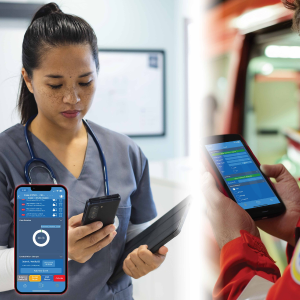
With e-Bridge, paramedics start the case in the field, and EMS, the ED and the cath lab all work from the same patient information.
“It has given us a platform where EMS, the Emergency Department, and the Cath Lab can all collaborate with the same patient information and work together to move the patient to the cath lab faster than we have ever seen before.” – Alina Capatina, STEMI Coordinator
12 minutes cut from average door-to-balloon time (17%)
40% of STEMI Activations now start in the field (+10%)
Cath lab and ED STEMI teams activated 24/7 with one notification
“The app really shines when Paramedics in the field start the case and the whole team can receive a real time GPS based ETA, patient demographics, and EKGs before the patient is even placed into the ambulance.” – Alina Capatina
Download the full case study to see how Baystate rolled out e-Bridge across its EMS partners and care teams, how charge nurses now activate the cath lab in one step, and how the team uses case data for continuous quality improvement.